> For the complete documentation index, see [llms.txt](https://docs.tlic.cmu.ac.th/cmu-mango-canvas-manual/llms.txt). Markdown versions of documentation pages are available by appending `.md` to page URLs; this page is available as [Markdown](https://docs.tlic.cmu.ac.th/cmu-mango-canvas-manual/course-design/assign-group-work/manage-group-set.md).
# Manage Group Set
## Adding Group Set
{% hint style="info" %}
The Mango Canvas system can create up to 200 groups.
{% endhint %}
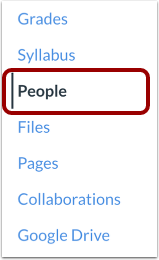
Open the left menu and select People.
At the top right corner, click the +Group Set button.
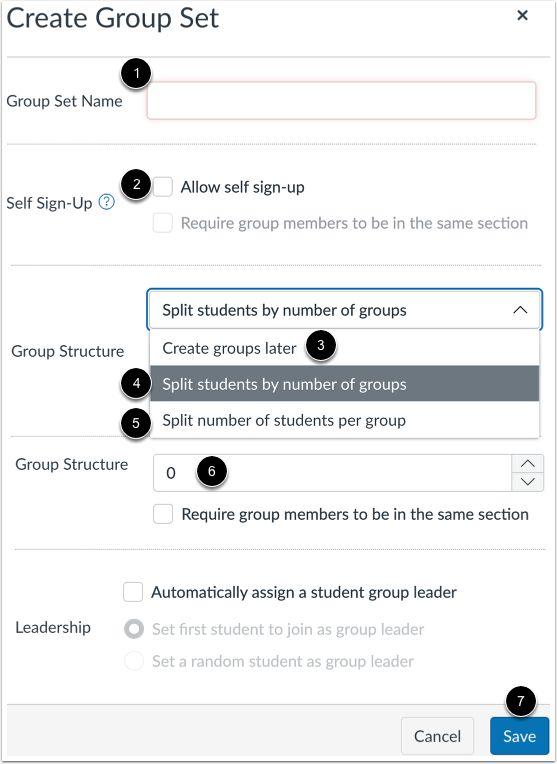
\[1] Name the group set
\[2] Allow students to choose their own group (self sign-up)
\[3] f you want to create a Student Group later or create a group with a .csv file, select Create groups later
\[4] and \[5] within the dropdown, you can choose whether to divide the groups according to the number of students or the number of student groups you want.
\[6] Specify the number of students you want
\[7] Once the settings are complete, click Save to create the group set.
Additional Information
* Exceptions when creating a Student Group with custom settings, you can set the system to select a group leader.
* In cases where you want group members to be students from the same section, you must create a Student Group with Self sign-up and automatic Student Group creation only.
* Mango Canvas system can create up to a maximum of 200 student groups.
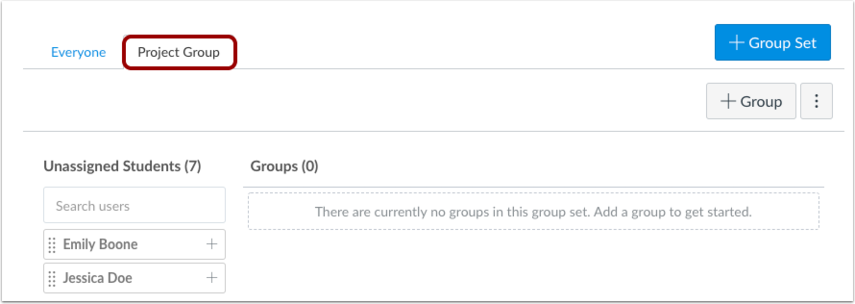
Once completed, review the group created.
## Importing Group Using .csv File
You can create groups by importing a .csv file. It is recommended that the instructor prepare student groups before publishing assignments.
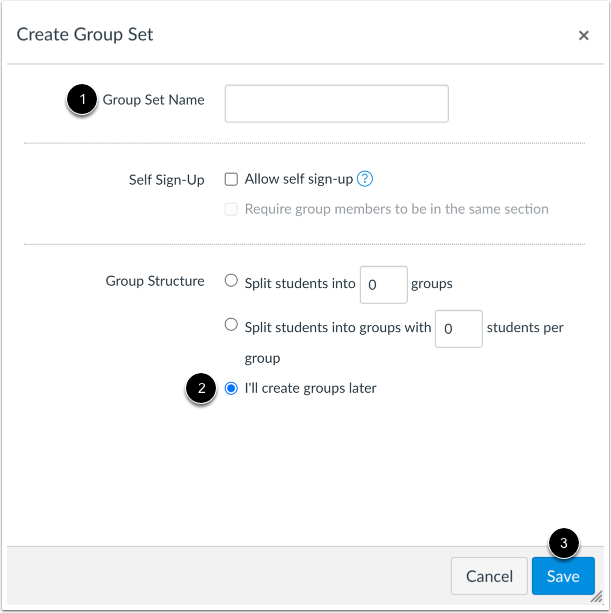
When creating a group set, name it \[1], select 'I'll create group later' \[2], then hit save \[3].
Click 'Import'
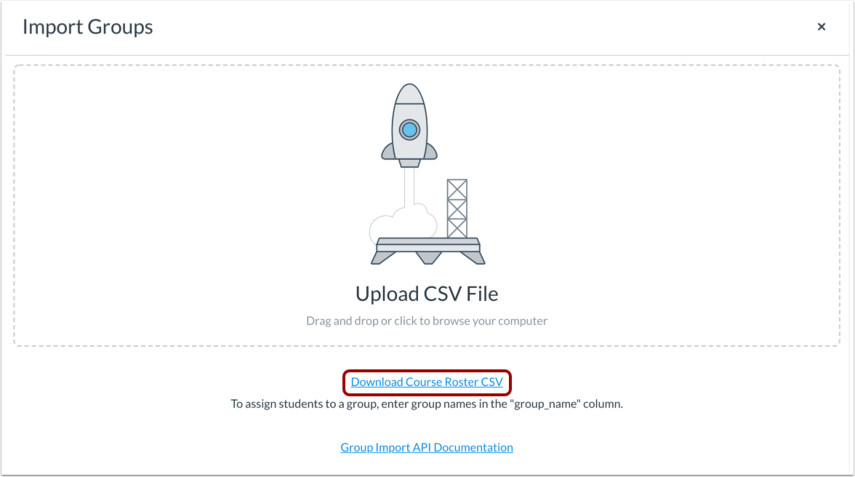
The import file window will appear. You can download the template for import by selecting **Download Course Roster CSV**.
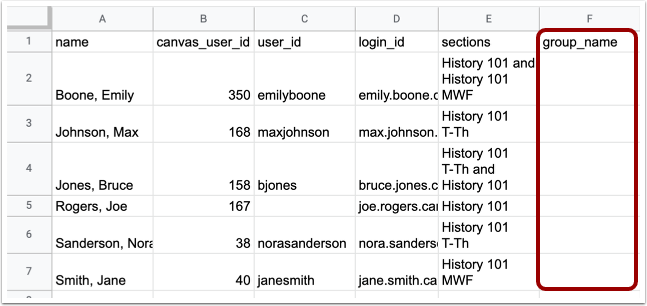
After importing the file, you will have the student information within the course. You can enter the Student Group name in the group\_name column directly. Do not modify other data within the file. Once you have entered the group successfully, click Save.
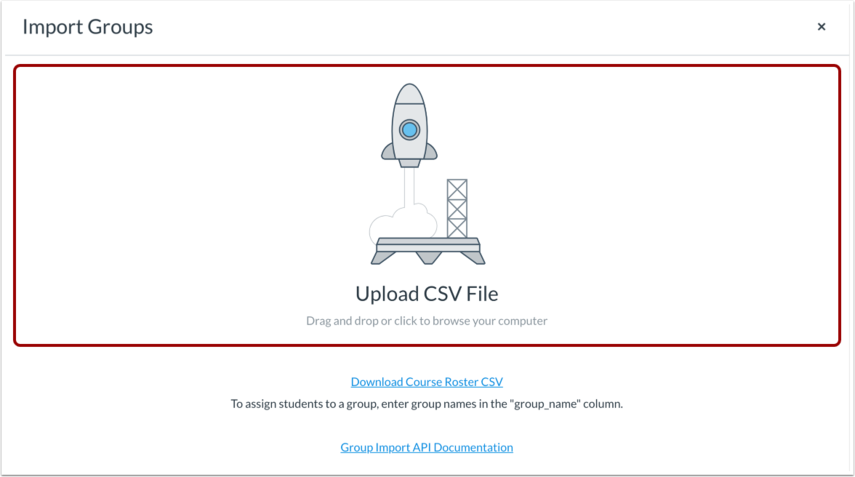
Upload the complete .csv file into the system.
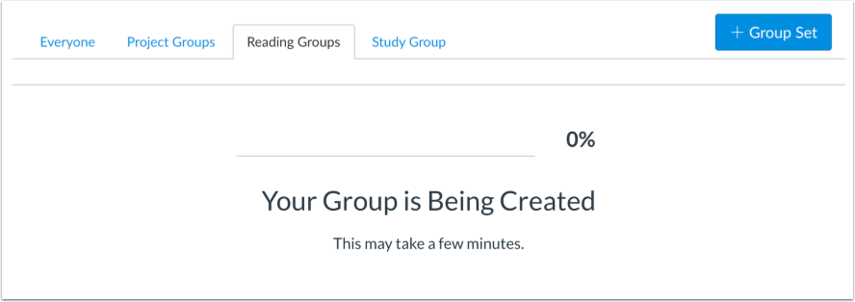
Wait for the system to create and import the group.
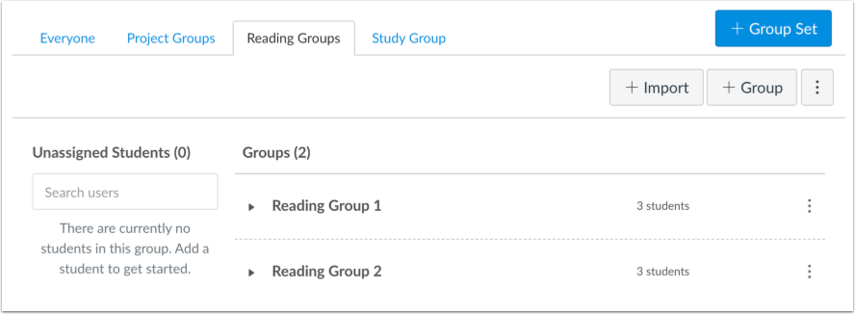
When the Student Group is successfully completed, it will appear in the Group Set.