> For the complete documentation index, see [llms.txt](https://docs.tlic.cmu.ac.th/cmu-mango-canvas-manual/llms.txt). Markdown versions of documentation pages are available by appending `.md` to page URLs; this page is available as [Markdown](https://docs.tlic.cmu.ac.th/cmu-mango-canvas-manual/course-design/speedgrader/get-started-with-speedgrader.md).
# Get Started with SpeedGrader
SpeedGrader helps instructors to grade assignments or answers of individual students or groups more efficiently.
### How SpeedGrader works
SpeedGrader displays all the information in the students' submissions for an assignment and saves it on the browser. This information includes the assignment or answer data, scores (both original scores and scores for newly submitted work), rubrics, and comments. This feature helps reduce the time it takes to load all the data and allows instructors to grade more efficiently without having to refresh the browser frequently.
In large-sized courses, it can affect the processing time of SpeedGrader. Assignments with more than 1,500 submissions will result in slower processing, and assignments with more than 2,500 submissions cannot be graded using SpeedGrader.
Therefore, Mango Canvas recommends dividing sections or groups of students in large-sized courses to ensure that the system can process and use SpeedGrader normally.
### Cautions!
Normally, the SpeedGrader tool is designed for a single instructor to grade and provide feedback. It is not recommended for courses with multiple instructors using SpeedGrader simultaneously. This is because it can impact data loading, updating and overlapping of the information. It may also affect the displayed grades in the Gradebook.
In cases where there are multiple graders, our team recommends limiting access to SpeedGrader in each section to only the responsible instructor.
### Moderated Grading
Ith SpeedGarder, moderated grading can be configured to assign scores. When the specified number of graders is reached, SpeedGrader will switch to read-only mode immediately.
### Additional Information
Instructors will not be able to delete students' submitted works or answers by themselves.
## Using SpeedGrader
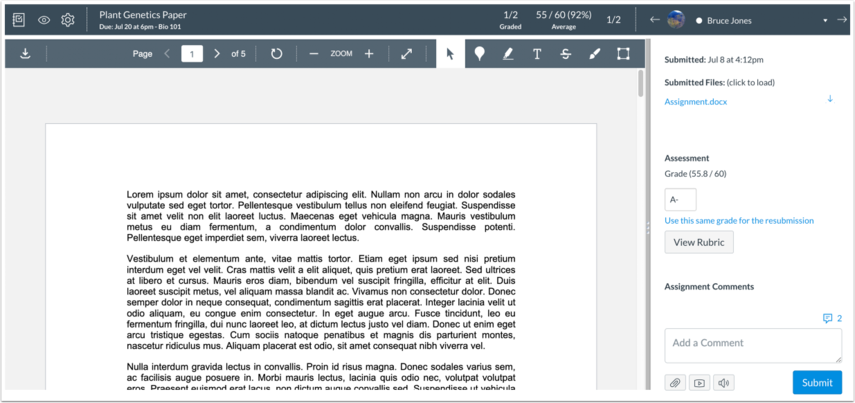
หน้าต่าง SpeedGrader
### SpeedGrader Menu
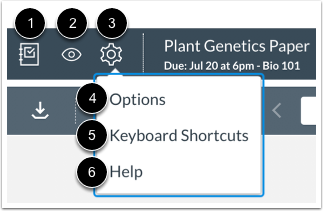
In the top menu bar of SpeedGrader, there are tools that help facilitate easier grading. In the left corner, there are various features including:
1. Return to Gradebook
2. View/Hide hidden assignment
3. SpeedGrader settings
* Options for viewing the student list and anonymous grading
* Keyboard Shortcuts
* Help and guide
### Assignment's Details
The long bar in the middle of the screen contains details of the assignment. It includes the assignment name \[1], the deadline \[2], the course name \[3], and the overall grading details provided by the instructor.
Click on the assignment name to view the details and also to download all the submissions/answers from the students for that assignment.
Click on the course name to go back to the main page of the course.
The grading details include the number of submissions/answers that have been graded \[4] and the average score \[5].
### Students List
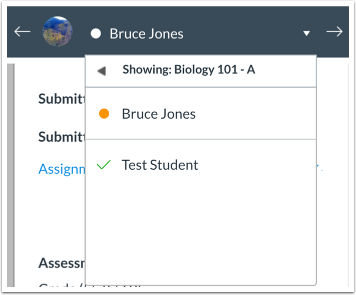
The right menu bar will display a list of learners within the course. You can click on their names to instantly view their assignments/answers.
### View Student's Assignments/Answers
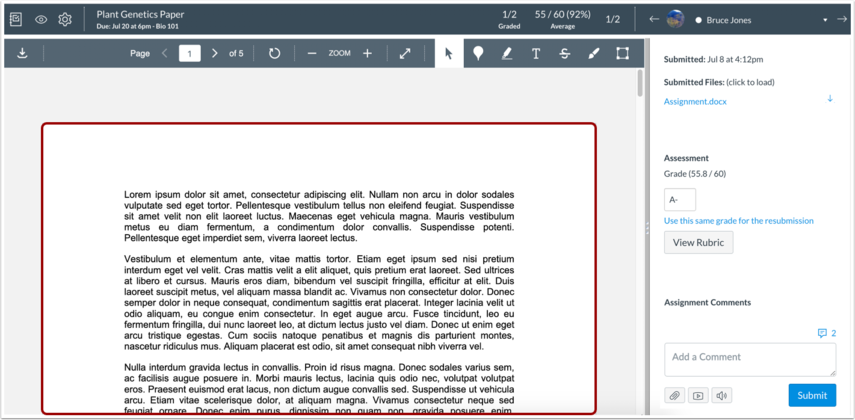
When selecting a student's name, the student's assignment/answer will appear in a window within a red frame as shown in the image above.
However, this depends on the type of submission set for the assignment. In some types, the system may not support and will not be able to display the results in SpeedGrader.
### View Uploaded File
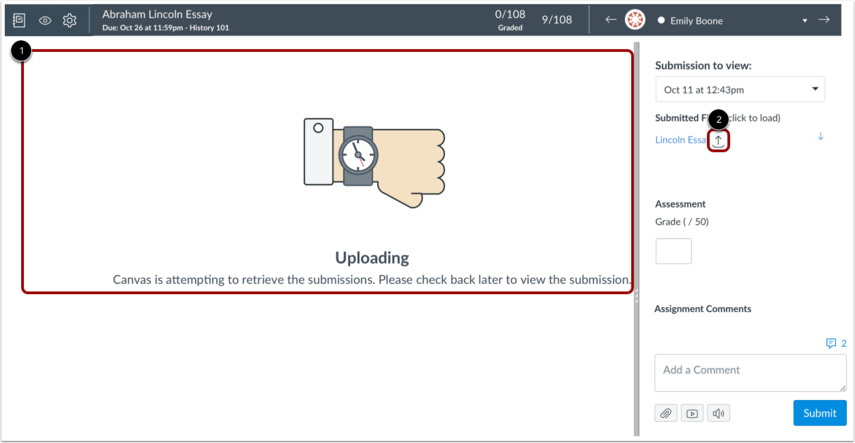
In the case of files uploaded from Google Drive or O365 into the system, the screen will display as shown in Figure \[1]. It may take some time for processing or you can download and open the file immediately at \[2].
### Failed/Incorrect Upload
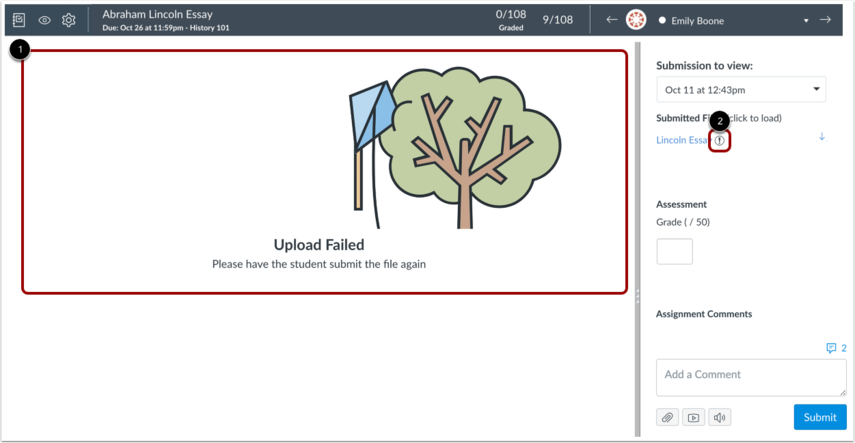
In the case of files uploaded from Google Drive or O365 that encounter errors or fail to be uploaded, the screen will display as shown in Figure \[1]. It may take some time for the processing to complete, and the downloaded file will be displayed as shown in the sample image \[2].
### Grading Period
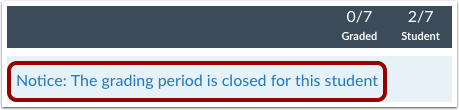
In cases where a course has multiple grading periods, if an assignment's grading period has ended, a notification will appear at the top of SpeedGrader, and the assignment cannot be edited or scored again.
### Menu Tab on the Right
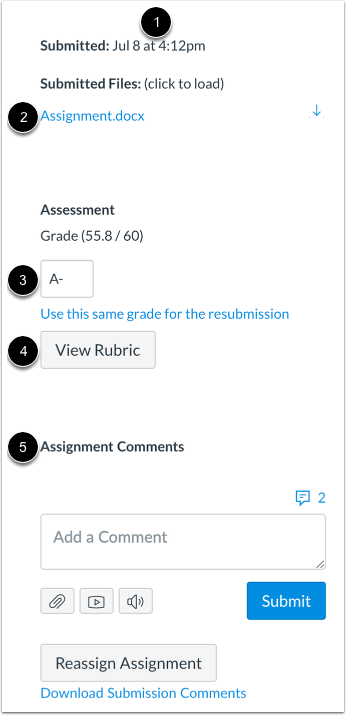
The right menu bar will display the details of the assignment/answer:
1. Date and time of submission
2. ดDownload the assignment/answer
3. Graing feild
4. View Rubrics (if available) for grading
5. Providing feedback to the student
### View Newly Submitted Assignment/Answer
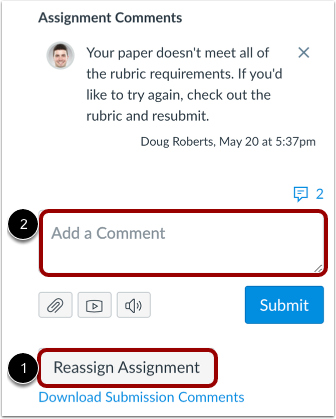
If the assignment/answer of the student needs to be returned for correction or resubmission, a button \[1] will appear. The student will receive a notification on their homepage, and the instructor may write additional details for the student to understand the reason at \[2].
### Submission Status
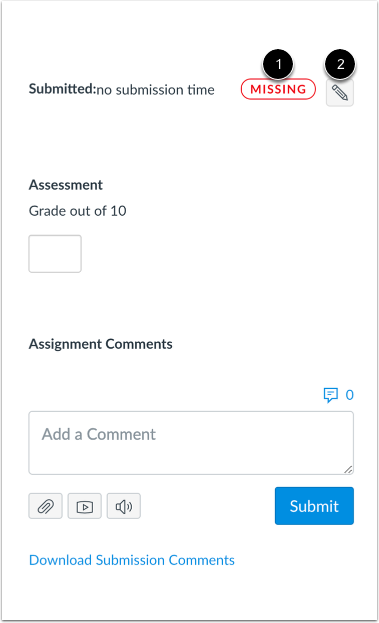
In the right-hand menu of SpeedGrader, you can view the status of the submission at \[1], and instructors can change the status at \[2]. The status options include Late, Missing, Excused, and None.
### View Next Student's Assignment/Answer
Once the assessment of the assignment/answer of the student is completed, if you want to switch to inspect the next person, click the arrow button next to the name of the student.
### View Group Assignment
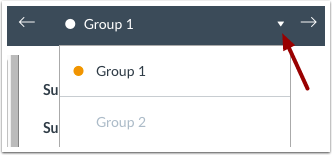
In the case of group assignments, instructors can select a group to view their submissions/answers by clicking on the Dropdown button. The group assessments is similar to individual assessments.
### Anonymous Grading
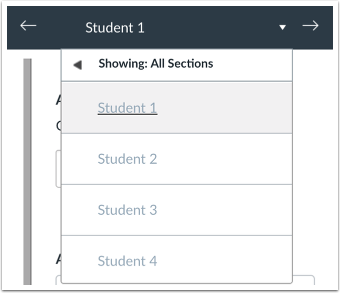
In the case where the assignment is set to anonymous, the names of the students will be displayed as shown in the image and their positions will be shuffled to not match the order displayed in the Gradebook.
In the case where the assignment is not set to anonymous, you can enable Anonymous Grading in SpeedGrader to hide the names of the students.